Blog
Amethyst Jewellery: History, Meaning, and Where It Comes From


Amethyst is one of the most well-known purple gemstones and has been valued for thousands of years. Amethyst jewellery has been a popular choice due to its being the birthstone for February but also because of its striking colour.
A Brief History of Amethyst
Amethyst has been used since at least 3,000 BCE. Ancient Egyptians carved it into amulets and jewellery, while the Greeks and Romans believed it could prevent intoxication. In fact, the name “amethyst” comes from the Greek word amethystos, which means “not drunken.”
During the Middle Ages, amethyst was associated with royalty and the church. Bishops often wore rings with amethyst, and European crowns included large amethyst stones. It symbolized piety, humility, and protection, as well as wealth.
Symbolism
Throughout history, amethyst has been thought to have protective and healing properties. People believed it could:
-
Calm the mind and help with focus
-
Protect against harm or negative energy
-
Encourage peace and balance
While these beliefs are historical, many people today still value amethyst for its symbolism as a stone of clarity and calm.

Raw amethyst from Thunder Bay cut into gemstones in this engagement ring.
Where Amethyst Is Found
Amethyst is mined in several countries, including:
-
Brazil and Uruguay – the largest sources today
-
Zambia and other parts of Africa – known for deep purple stones
-
North America – including Ontario, Canada, particularly Thunder Bay and southern Ontario
-
United States – Arizona and North Carolina
Amethyst Variations and Alternatives
Amethyst comes in different shades and related stones:
-
Rose de France: A very pale purple amethyst, often used when a lighter look is desired.
-
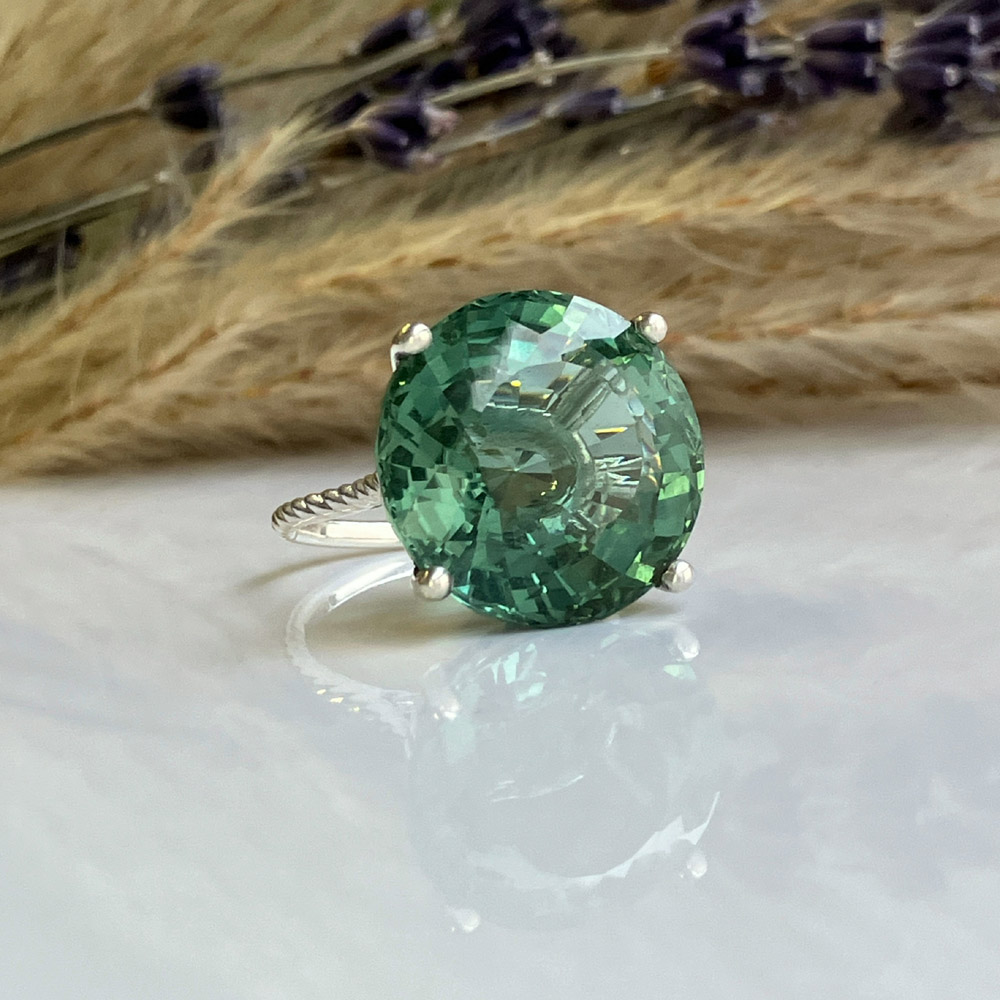
Green amethyst (Prasiolite): Technically not amethyst, prasiolite is green quartz created by heat-treating certain amethyst. It’s popular for its fresh, subtle green colour.
-
Deep purple stones: Classic amethyst with rich, dark purple colour remains the most sought-after for jewellery.
These variations provide options for different tastes, colour preferences and budgets while still being part of the amethyst family or closely related quartz stones.


Treatments and Synthetic Amethyst
Most amethyst on the market today is natural, untreated quartz, but some stones may undergo treatments:
-
Heat treatment: Can deepen or lighten colour or produce prasiolite (green quartz).
-
Irradiation: Sometimes used to enhance colour, though less common.
Synthetic amethyst also exists. Lab-grown amethyst has the same chemical composition as natural stones but is created in a controlled environment. It’s estimated that around 5–10% of amethyst on the market is synthetic, often sold at lower prices or for mass-produced jewellery.
Amethyst Types and Treatments Table
| Type / Name | Colour Range | Treatment / Notes | Common Use in Jewellery |
|---|---|---|---|
| Classic Amethyst | Deep to medium purple | Usually untreated | Rings, necklaces, earrings |
| Rose de France | Very pale purple | Usually untreated | Delicate rings, light-coloured settings |
| Chevron Amethyst | Purple with white banding | Usually untreated | Statement rings, pendants |
| Green Amethyst / Prasiolite | Pale to medium green | Heat-treated amethyst | Rings, necklaces, bracelets |
| Synthetic Amethyst | Purple (varies) | Lab-created stone | Lower-cost jewellery, mass-produced pieces |
Notes:
-
Heat treatment can sometimes deepen or lighten amethyst colour.
-
Irradiation is less common but may be used to enhance colour.
-
Most amethyst on the market is natural, with only a small percentage being synthetic (~5–10%).
Interesting Facts About Amethyst
-
Amethyst is a variety of quartz.
-
Its purple colour comes from iron and natural radiation.
-
It is the birthstone for February.
-
With a hardness of 7 on the Mohs scale, it is durable enough for everyday jewellery.
-
“Chevron amethyst” shows banded patterns that are especially striking.
Famous Examples of Amethyst
Some historical pieces of amethyst include:
-
The Delhi Purple Sapphire, actually an amethyst, once thought to protect rulers in India.
-
Large amethyst stones featured in Russian and European crowns.
These examples show how highly valued amethyst has been throughout history.
Amethyst Jewellery
Amethyst continues to be popular in jewellery. It pairs well with gold, white gold, and silver, and is used in both modern and vintage-style pieces. Many people also choose amethyst jewellery for sentimental reasons, especially if it has been passed down through a family.
Whether you’re looking for a simple ring or a statement necklace, amethyst jewellery offers both beauty and a connection to history.
If you’re looking for birthstone jewellery ideas be sure to check out our family jewellery portfolio.